
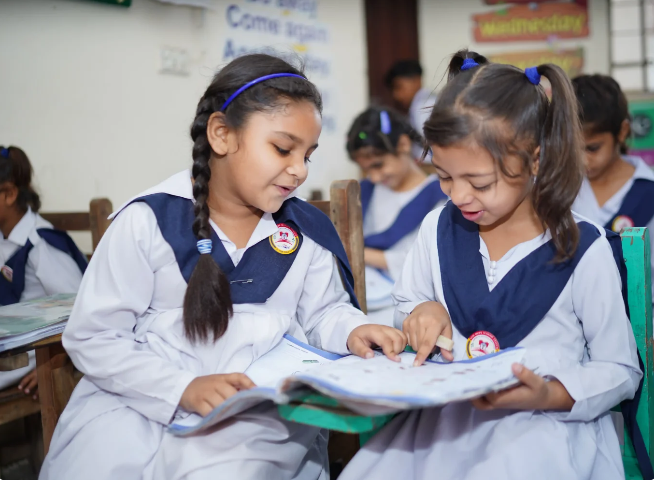

The Future We Envision, Building the Future Through Education and Innovation
✓ About Us
Rahber-The Advisor University
A Message from Our CEO
"I have always believed that education should do more than prepare young people for examinations or employment. It should give them the knowledge, confidence, and ability to understand the world, question existing ideas, and create something new. This belief is at the heart of Rahber The Advisor and everything I hope we can achieve in the years ahead."
My vision is to build Rahber into a world-class institution for science, technology, engineering, and research. I dream of a future where Rahber is not only educating school children but is home to a university where students can study advanced sciences, develop new technologies, conduct meaningful research, and contribute to discoveries that improve people's lives.
When I look at universities such as Oxford, Cambridge, Imperial College London, and University College London, I admire their long history of academic excellence, scientific discovery, and contribution to society. These institutions have helped shape the modern world through their research, their ideas, and the generations of scientists, engineers, and thinkers they have educated. My ambition is to build an institution that shares this commitment to knowledge, research, and excellence, while making these opportunities accessible to children who would otherwise never have the chance to experience them.
One of my greatest hopes is that a child growing up in poverty, in a small village or an underprivileged community, will one day have the opportunity to study at one of the world's leading universities. I want children who have never imagined themselves at Oxford, Cambridge, Imperial, or UCL to know that these places are not beyond their reach. Their financial circumstances should not determine how far they can go in life.
I understand that reaching such institutions requires far more than ambition. Students need strong academic foundations, good teachers, access to technology, confidence, guidance, and often financial support. Many talented children are unable to pursue these opportunities because they lack these resources, not because they lack intelligence or ability. Through Rahber, I want to help bridge that gap. I hope we can build pathways that prepare students academically, introduce them to research and advanced learning, help them identify scholarships, and guide them through the process of applying to leading universities around the world.
I would consider it one of Rahber's greatest achievements if a child who began learning with us, perhaps with no computer at home and little knowledge of the opportunities available beyond their community, eventually earned a place at a world-renowned university. I want to see our students become researchers at Cambridge, engineers at Imperial, scientists at Oxford, and innovators working in laboratories and technology companies across the world. More importantly, I hope they will carry their knowledge forward and create opportunities for others.
Technology is changing the world at an extraordinary pace. Artificial intelligence, robotics, computer science, biotechnology, automation, and advanced engineering are transforming how we live and work. The next generation will grow up in a world very different from the one we know today. I believe our responsibility is not simply to prepare young people to use these technologies, but to give them the skills and understanding to develop them.
I want Rahber to become a place where a child who first discovers programming in a classroom can one day become a software engineer, an artificial intelligence researcher, or a scientist working on problems that have yet to be solved. I want our students to have the opportunity to move from learning basic scientific principles to working in advanced laboratories, building robots, designing intelligent systems, developing software, and conducting original research.
For me, science and technology education must always involve practical experience. Students should have the freedom to experiment, make mistakes, ask difficult questions, and find their own solutions. A classroom should be a place where curiosity is encouraged and ideas are taken seriously. I want to see laboratories filled with students building machines, testing new technologies, writing software, and working together on projects that address real challenges.
Research will be an essential part of this vision. A great university should not only pass existing knowledge from one generation to another; it should also create new knowledge. I hope that one day Rahber will have its own research centres in artificial intelligence, robotics, computing, engineering, and other emerging scientific fields. These centres should bring together talented students, academics, researchers, and industry professionals to work on discoveries and technologies that can benefit communities locally and internationally.
I also believe that access to such opportunities should not depend on a person's financial circumstances or where they were born. There are talented young people in towns and villages who may never have seen a robotics laboratory, used modern scientific equipment, or had the opportunity to learn computer programming. Their potential is no less than that of students attending some of the finest institutions in the world. What is often missing is the opportunity to develop that potential.
This is one of the reasons Rahber is so important to me. We want to introduce children to science and technology early, particularly those who might otherwise have limited access to these subjects. By teaching programming, encouraging scientific thinking, and providing practical learning experiences, we are laying the foundations for the future I hope to build.
Over time, I want Rahber to develop strong relationships with universities, research institutions, technology companies, and scientists around the world. I want these relationships to open doors for our students through mentorship, scholarships, academic exchanges, research opportunities, and exposure to international standards of education. I hope that one day we will be able to support talented students from disadvantaged backgrounds throughout their educational journey, from their earliest lessons in science to their admission into leading universities.
At the same time, my long-term ambition is to establish a university of our own, one that offers the same quality of education, research opportunities, and academic environment that students seek at the world's most respected institutions. I want a child from a family with very limited means to have the opportunity to receive an exceptional education without feeling that such an education belongs only to the wealthy or privileged.
I understand that building a university of this standard is an enormous undertaking. It requires time, resources, experienced educators, dedicated researchers, modern facilities, and above all, a sustained commitment to academic excellence. It is not something that can be achieved in a few years, and I do not underestimate the challenges ahead.
But I believe that every great institution begins with people who are willing to think beyond what exists today. We must begin with what we have, do it well, and continue building. The work we are doing with children today may appear small compared with the scale of this ambition, but I see it as the first step in a much longer journey.
My hope is that in the years to come, Rahber will grow from an organisation providing educational opportunities into a respected centre of higher education, scientific research, and technological innovation. I want future generations to look at Rahber as a place where important discoveries are made, where new ideas become real technologies, and where talented young people are given the opportunity to achieve things they once thought impossible.
My dream is to see a child who once struggled to afford an education walk through the doors of a world-class university, whether that is Oxford, Cambridge, Imperial, UCL, or one day Rahber's own university. I want that child to know that their circumstances did not define their future. Their talent, determination, and the opportunities we helped create made that journey possible.
Ultimately, I do not simply want to build another university. I want to build an institution that advances science, creates technology, develops exceptional minds, and gives children from the most disadvantaged communities a genuine opportunity to participate in shaping the future.
That is the future I see for Rahber The Advisor, and that is the vision I hope we will continue working towards, one generation at a time.
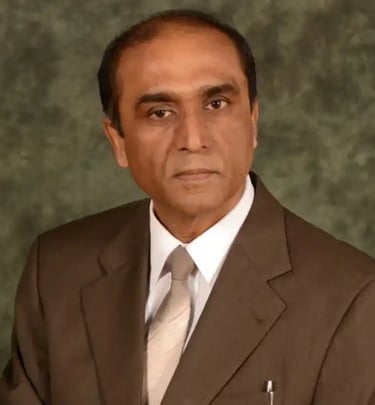
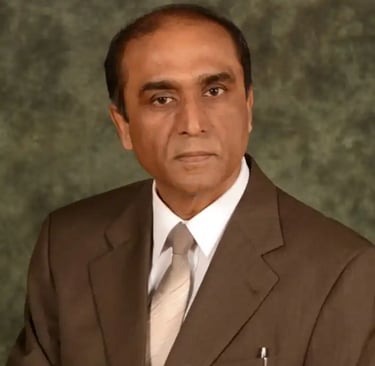


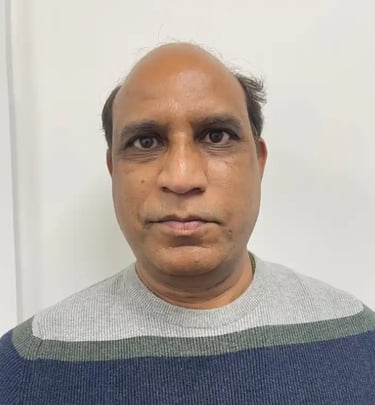
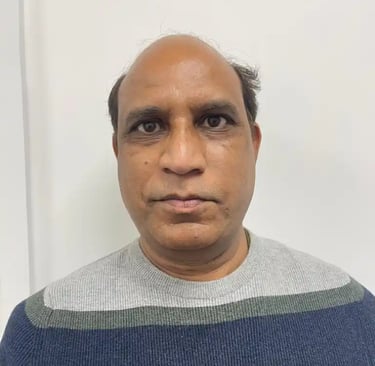
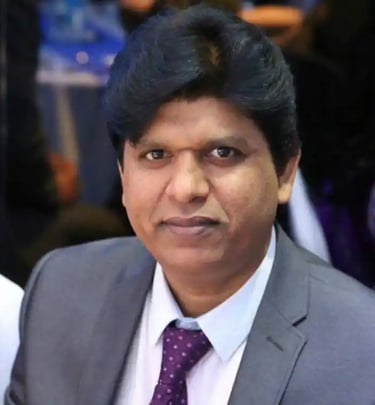
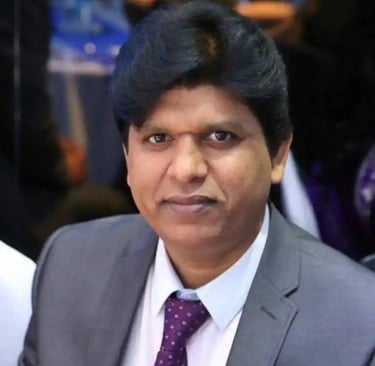
Emmanual Rafail Christian
Founder & CEO
Dr Angel Rafail Christian
MD, General Secretary, Co Founder
Patras Sharif
Trustee
Jawed Bhatti
Trustee
Borad of Trustees
Advisory Boards & Leadership Team
Higher Education Advisory & Planning Board
Prof. Dr. Mahboob Hussain (PhD) — Chairman, Department of History & Pakistan Studies
Prof. Dr. Saeed Mangi (PhD) — Director, Institute of Arts & Fashion Design
Prof. Dr. Naimatullah Khilji (PhD) — Former Director, Institute of Arts & Fashion Design
Prof. Dr. Muhammad Saleh Jumani (ME [Germany], PhD [UK]) — Professor
Assistant Prof. Dr. Syed Hassan Ali (PhD [UK]) — Assistant Professor
Prof. Mumtaz Shat (Retired) — Psychology
Assistant Prof. Aneel Kumar Bhatia (PhD Scholar) — Assistant Professor
Dr. Ehtisham Obed (MBBS, FCPS) — Medicine
Primary & Secondary Education Advisory Board
Dr. Asad Jalal (PhD, UK)
Mrs. Christina Tubssum (MSc, UK)
Margaret Younes (BSc, MA, M.Ed)
Amier Bashir (MBA)
Nixon Khaksaar (BSc, MBA)
Shafique Sharif (M.A)
Farzana Shafique (B.Ed, MA)
Medical Doctors
Dr. Ehtisham Obed
Dr. Naved Tariq
Dr. Isaac Ashar
Dr. Solmoon
Dr. Emram Azara
Dr. Nida e Farah
Dr. Sumera David
Dr. Sara Naeem Paul
Dr. Armita Jonathan
Dr. Mehek Mushtaq
Dr. Dawood Samuel
Clinical, Educational & Career Counselling Psychologists
Abraham Yusuf — BSc (Hons) Psychology, MSc Psychology, MSc Clinical Skills in Integrative Psychotherapy
Nomita Clamtina — BS (Hons) Computer Science in Psychology, MSc Clinical Psychology
Rizwana Shakh — MSc Psychology, Postgraduate Diploma (PGD) in Clinical Psychology
Surkhab Kamran — PhD in Clinical Psychology
Administration & Management Officers
Obed Kramat
Suneeta Obed
Shakeel Michael
Work with us
© Rahber-The Advisor. All Rights Reserved 2025.
142 Woodside Green London, UK SE25 5EW
+447762482107